
Retevis RT95 Dual-Band Mobile Transceiver
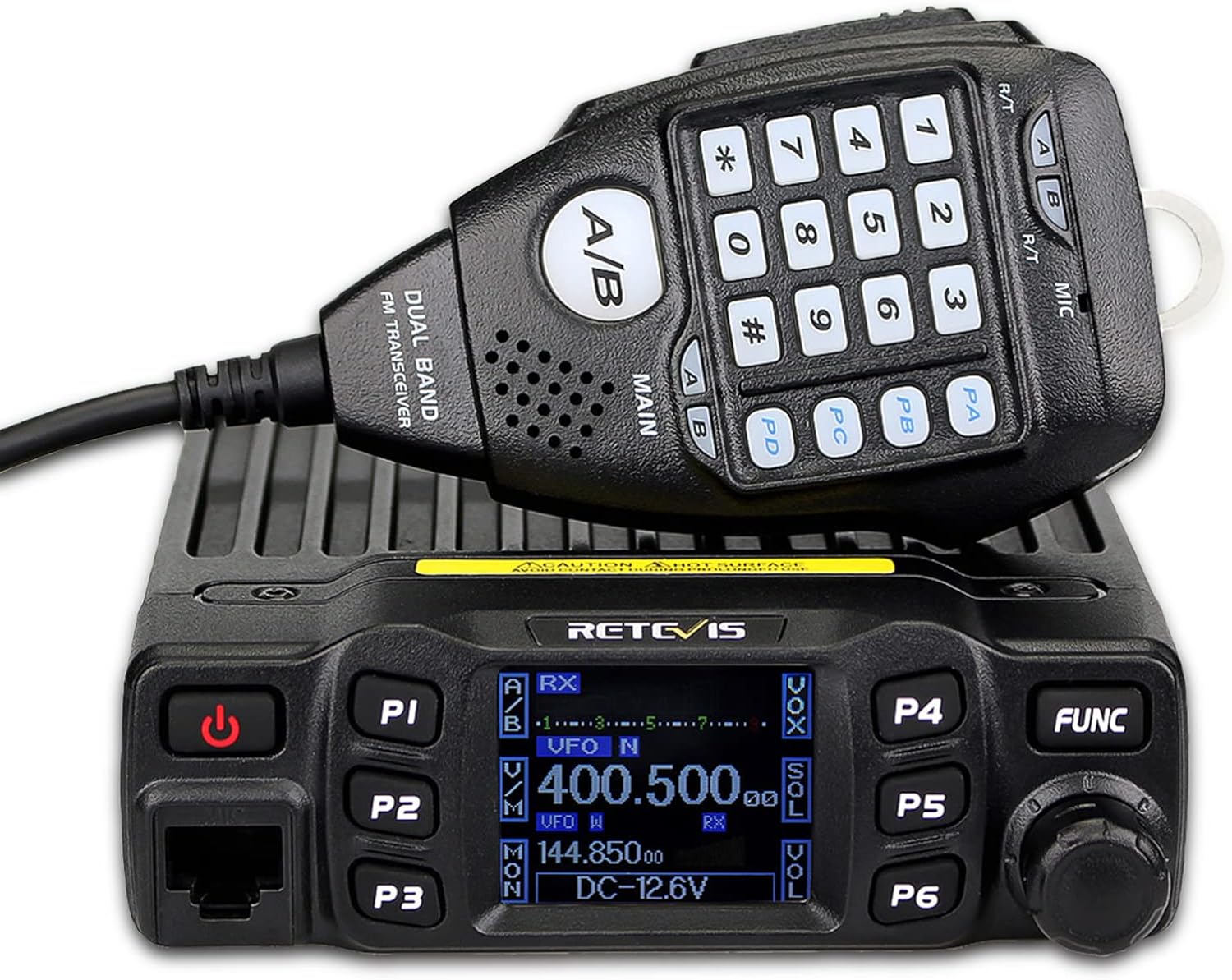
If you’re in the market for a capable dual-band mobile ham radio at an affordable price, the Retevis RT95 is worth a serious look. Below is a detailed review covering its features, strengths, limitations and how it stacks up for building owners, FM technicians or enthusiasts alike.
Key Specifications & Features
Covers VHF 2 m (136-174 MHz) and UHF 70 cm (400-490 MHz) amateur bands (depending on region/model).
Output power selectable: ~5 W (low), ~15 W (med), ~25 W (high) in many tests.
Colour LCD screen (rotatable) for flexible mounting orientation.
Metal alloy die-cast body with external heatsink fins; no internal fan.
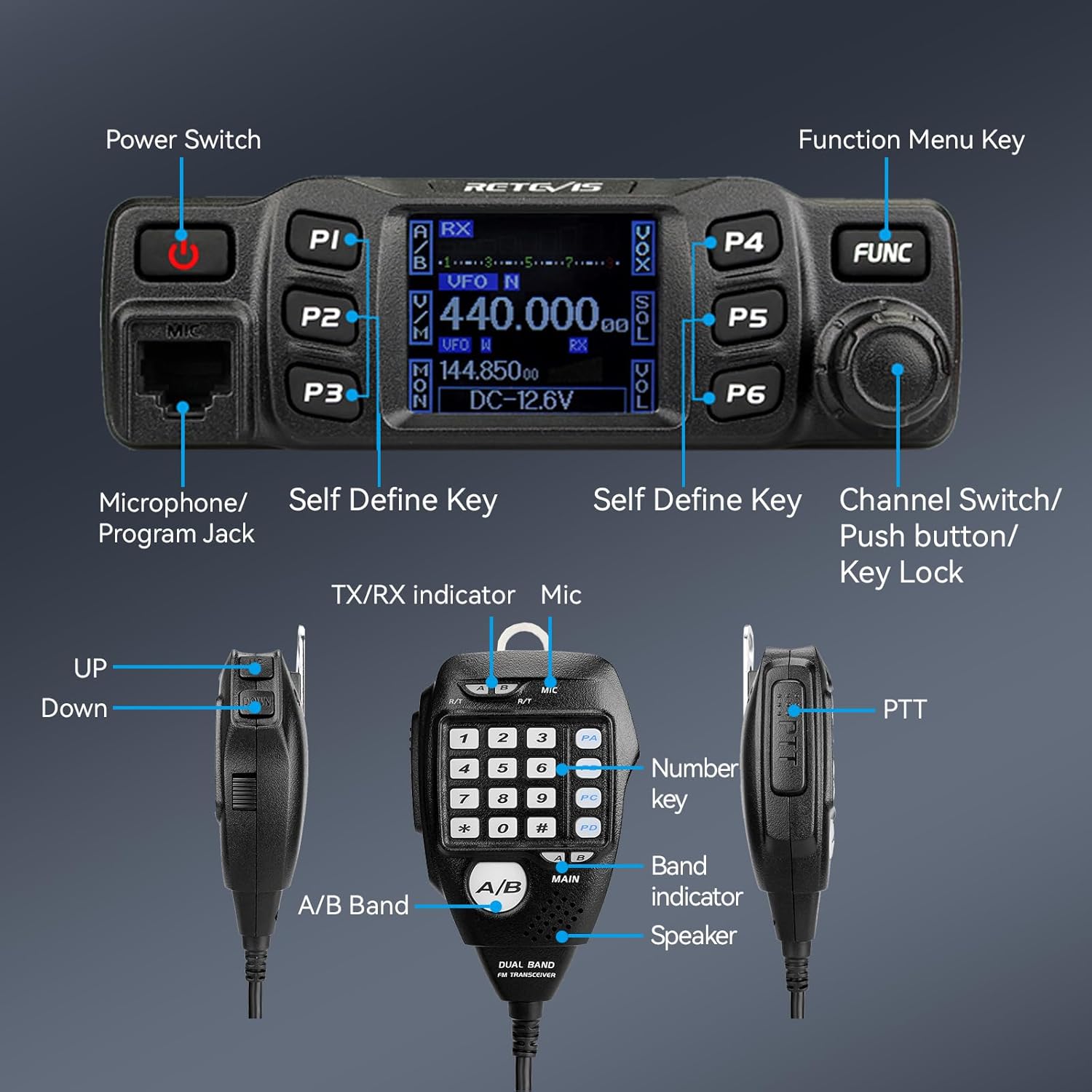
Multiple programmable buttons on main unit and microphone (P1-P6 + PA-PD on mic) allow custom function assignment.
Dual-watch capability (monitoring two bands/channels) though not true dual-receive (i.e., both bands cannot be received simultaneously).
Rotatable screen feature: flip the display 180° so that mounting upside-down or in different orientation remains readable.
Build Quality & Usability
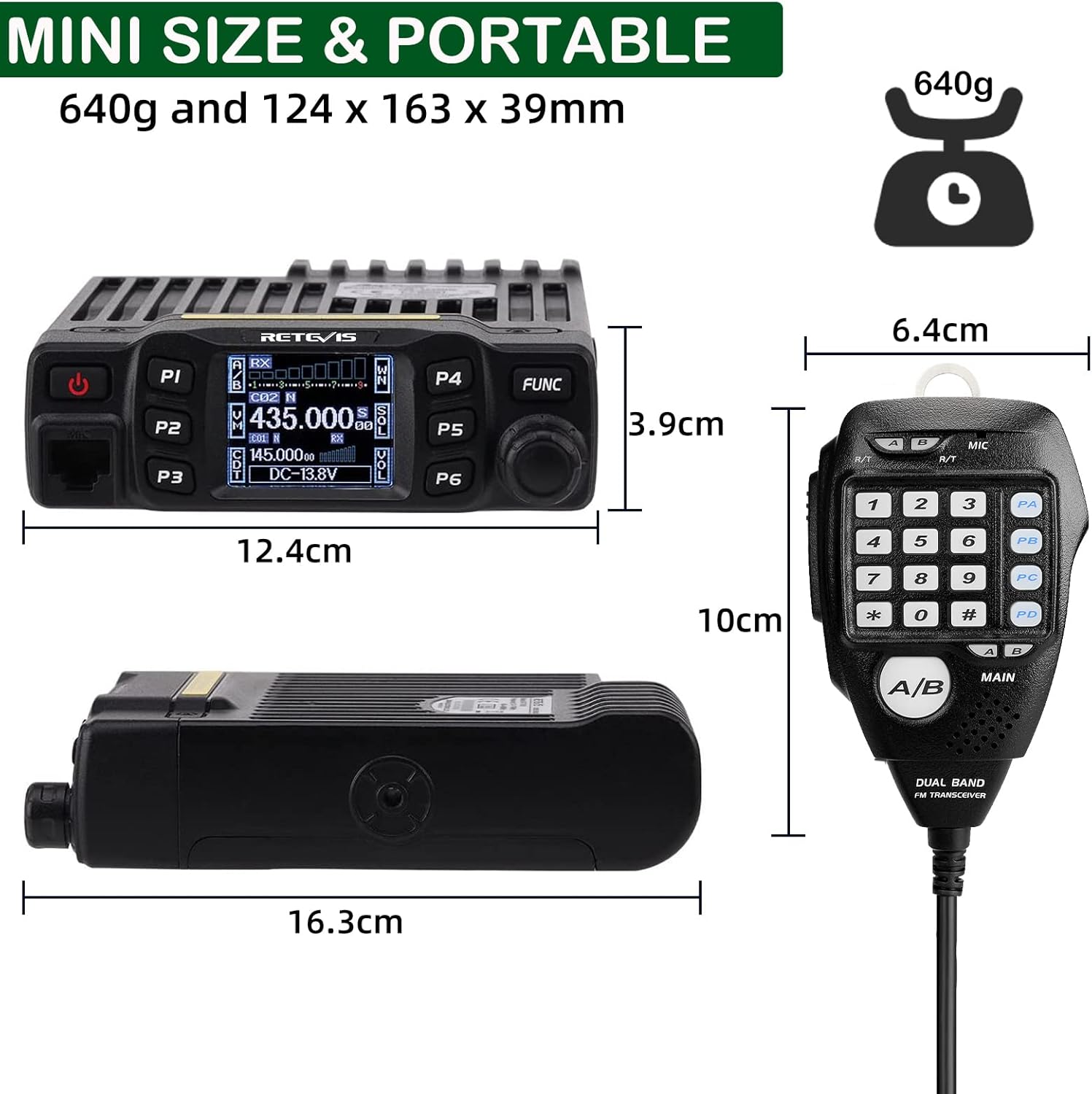
Users report the RT95 feels solid and well made, with a good weight and compact footprint for a mobile installation.
The display is clear and bright, with a large S-meter and easy-to-read frequency/channel indication.
Microphone is well-designed, with built-in speaker in some versions, good ergonomics, and backlit buttons.
For a building services/maintenance professional (like yourself) who might install this in a service vehicle or use it on site, these are good usability traits: ease of viewing in variable lighting, mountable in different orientations, and enough programmable functionality to tie into workflow.
Reception & Transmission Performance
According to test data: At 146.52 MHz (2 m), high power setting achieved ~21 W, medium ~15 W, low ~4-5 W. Similar results on UHF ~20W high, ~13W med, ~4-5W low.
Harmonic suppression measured reasonably well: 2nd/3rd harmonic at approx -50 dB in one test.
Users report good receive sensitivity and audio clarity in mobile use (vehicle/off-road).
In short: for many practical mobile amateur use-cases (local simplex, repeater access) the RT95 performs well.
Areas for Improvement & Considerations
No built-in cooling fan: Because of this, heat build-up can be a concern if running high power continuously. One reviewer noted it tries, but “when you get long winded, the radio body gets hot to the touch.”
Programming software: Several reviewers find the supplied programming software and workflow less smooth than modern rigs; one review states “programming the radio is a little bit of a challenge… the software is clunky” and CHIRP support is lacking.
Dual RX: The unit supports dual-watch (monitoring two channels) but not true simultaneous dual-receive. If your use case requires truly parallel RX (e.g., monitoring two separate frequencies at once) this is a limitation.
Regional band-plans: Some models may have transmit limitations in certain bands (e.g., 70cm U.S. version limited 430-440 MHz) unless unlocked.
Suitability & Recommendation
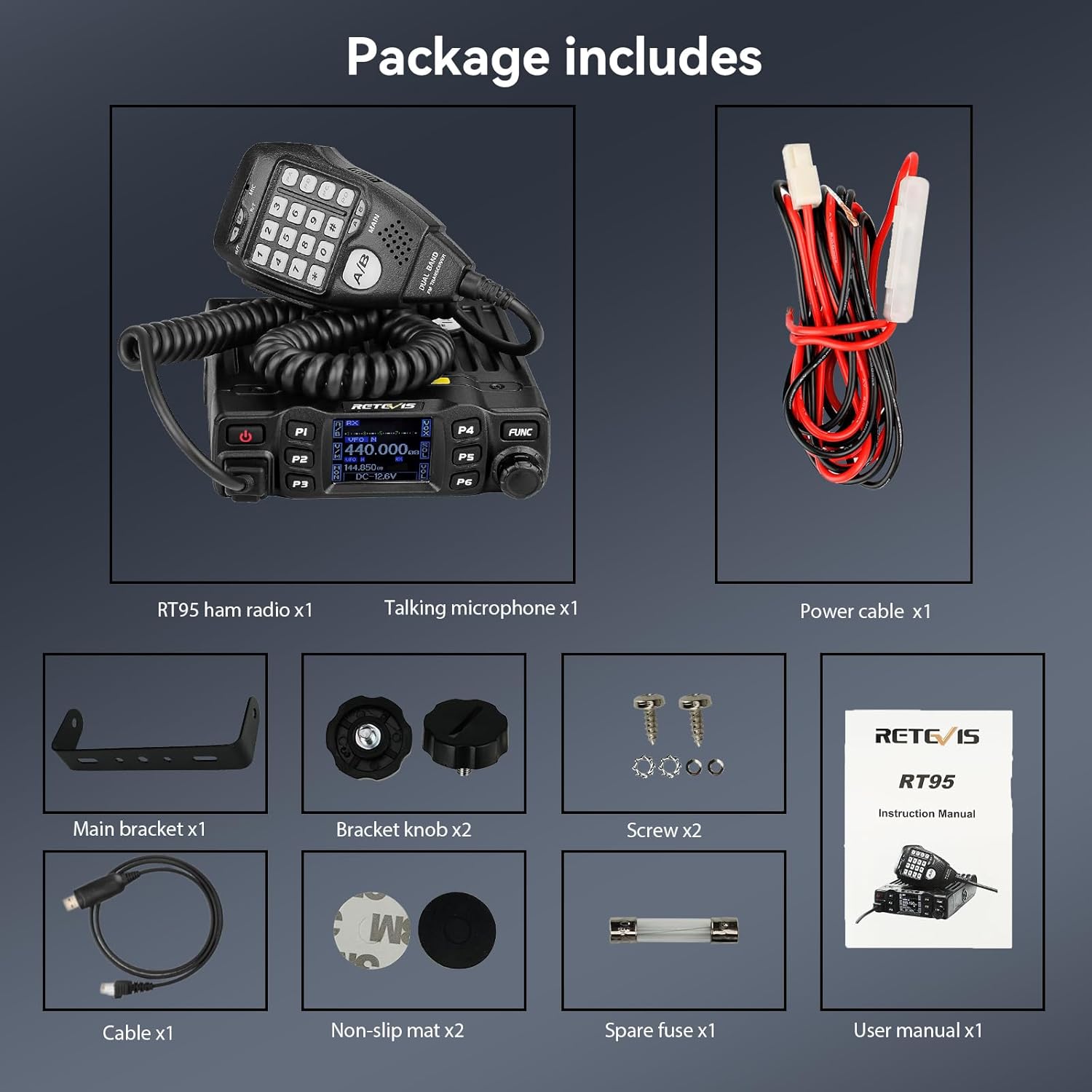
The compact form and flexibility (rotating screen, good speaker) suit installation in a vehicle (service van, technician car) beautifully.
The dual-band coverage means you can access both local 2 m and 70 cm repeater nets or simplexes depending on your region.
Programmable buttons allow you to map key functions you use frequently (e.g., toggle between favourite channels, adjust power level, scan).
Reasonable power (up to ~25W) gives good mobile range for urban/suburban maintenance or building-manager travel.
Things to watch:
If you plan very long transmissions at high power (e.g., as a fixed base station) the heat issue may matter: ensure good ventilation or use lower power setting.
If you need seamless ease of programming or intend heavy channel management, the programming software limitations may be a minor friction point.
Make sure the version you purchase covers the band segments you need in the UK/EU (UK licence use-cases) and complies with regional regulations (output power limits, type-approval).
For installations in a vehicle, ensure you pair with a good mobile antenna, proper mounting, and sufficient power supply (clean 13.8 V system) – users on forums note caution with cheap supplies/cigarette lighter plugs.
Verdict
For the price point, the RT95 offers a very good value dual-band mobile transceiver with solid build, flexible mounting/display, and practical power output for many amateur mobile and field uses. If your work involves being on the move (service van, building checks, FM technician visits) the RT95 could be a strong asset for your comms toolkit.
However, it’s not flawless: if you demand the fastest, slickest programming experience, or truly simultaneous dual receive, or high-power base-station use without ventilation concerns, you might consider stepping up to a bare-bones higher tier rig. But at its price, the RT95 hits the right balance for many.